Search
Made to Move Communities™
Inspiring the next generation of innovators as they develop inclusive mobility solutions for a more connected world
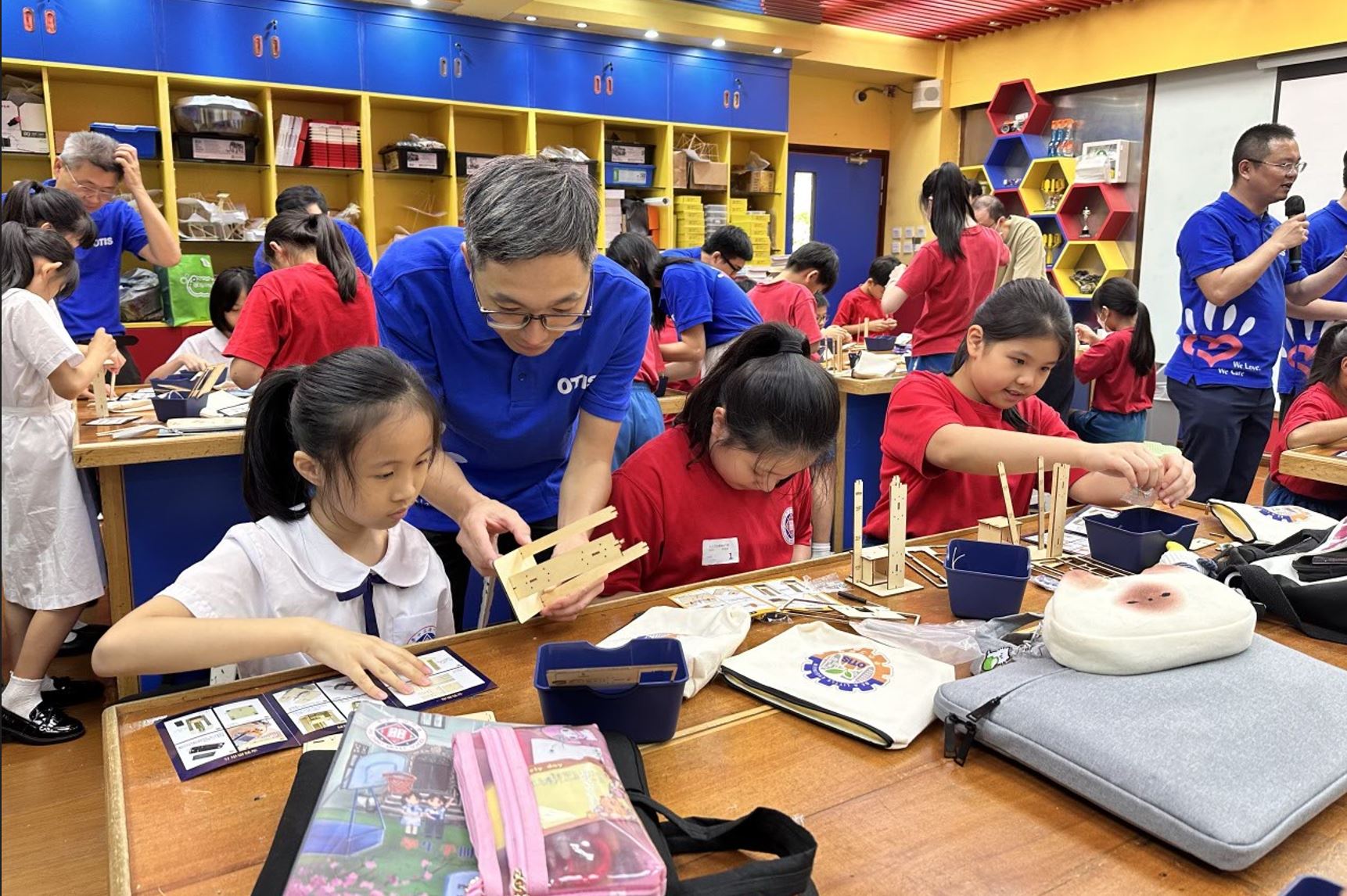
The Made to Move Communities™ challenge, launched in 2020, is Otis’ global social impact program. It pairs students with Otis mentors to solve real-world mobility challenges through STEM and artificial intelligence. Each year, students explore how mobility affects their communities and develop innovative solutions that make movement safer, more inclusive and more sustainable.
The program is designed to spark interest in STEM careers, strengthen our future workforce, and deepen Otis’ engagement in the communities where we live and work. It also supports career development by offering Otis colleagues meaningful opportunities to mentor, lead and grow.
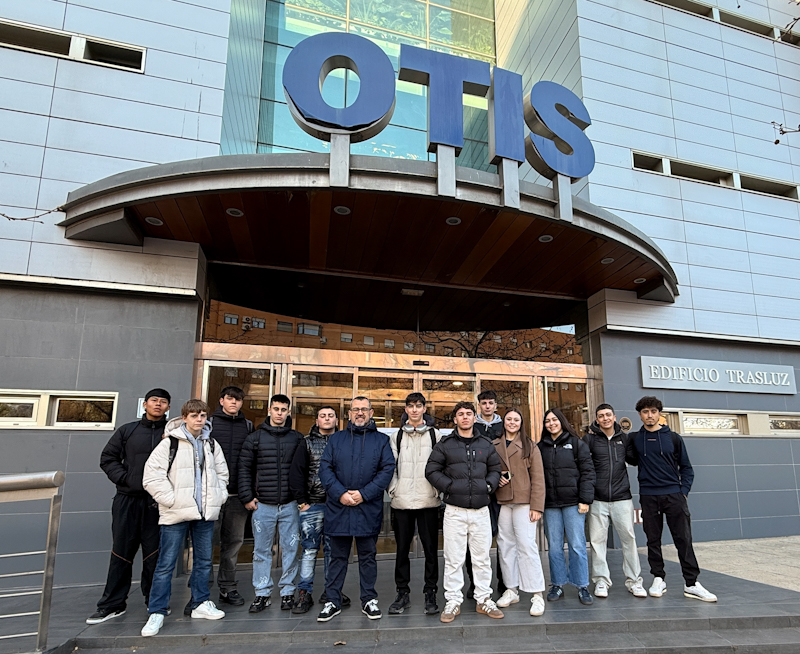
One example of the program’s benefit to the business is the story of Agustín, a former participant in the Made to Move Communities initiative who now works at Otis as a technician. His experience demonstrates how exposure to STEM and mentorship can open doors to career opportunities while helping build a strong pipeline of future talent for our business.
1250+
1000+
145+
Year 7: Mobility solutions to support aging populations
Past Made to Move Communities challenges
Mobility solutions to support people and communities in times of natural disaster
Natural disasters are becoming more frequent and intense, disrupting infrastructure and limiting access to essential services. These events present significant mobility challenges for communities and first responders. During the sixth year, the Made to Move Communities program brought together Otis colleagues and more than 200 students from 18 schools across 14 countries and territories to leverage artificial intelligence in developing more resilient, inclusive and accessible solutions for disaster preparedness and recovery.
Artificial intelligence-driven solutions to enable more inclusive and sustainable mobility
Mobility solutions to expand access to green space and advance well-being
In this era of rapid urbanization, there's an urgency to preserve and provide green spaces for the benefit of global public health. However, physical, geographical and socioeconomic barriers prevent residents from equally accessing and enjoying the full benefits of these recreational spaces.² For the fourth year of our Made to Move Communities program, Otis colleagues mentored 240+ students from around the world in researching this inclusive mobility challenge and designing innovative solutions to improve the health and well-being of local communities.
Mobility solutions to reduce the impacts of climate change
Mobility solutions for older populations
The number of older adults is projected to double to 1.5 billion in 2050.³ For the second year of Made to Move Communities, we tapped young minds and applied creative thinking to help cities of the future adapt and meet the needs of this growing population. Across 14 countries and territories, teams of Otis colleague mentors and students created STEM-based mobility solutions ranging from connected wheelchairs and smart escalators to a device improving access to local water stations.
Mobility solutions to COVID-19
In its first year, Made to Move Communities engaged schools in Brazil, China, Germany, Hong Kong SAR, Japan, Russia, Spain, the United States and Singapore. Under the mentorship of Otis colleagues, nearly 100 students spent eight weeks developing STEM-based solutions to address mobility challenges in their communities – particularly those most affected by the COVID-19 pandemic.
Our winners and their solutions
-
Global co-champion: Geniko Lyceum Filothei; Filothei, Athens, Greece
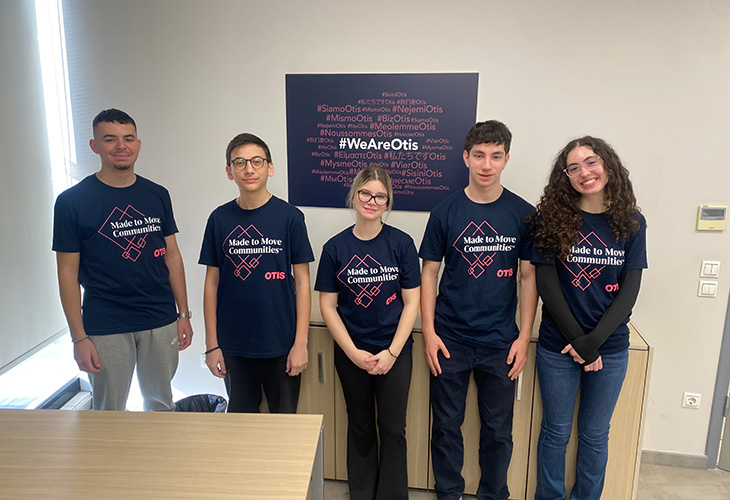 A smart, AI-enabled emergency container that tracks rapid rainfall fluctuations and activates a preventive response system to protect vulnerable citizens during flood risk events.
-
Global co-champion: HKFYG Lee Shau Kee College; Hong Kong SAR
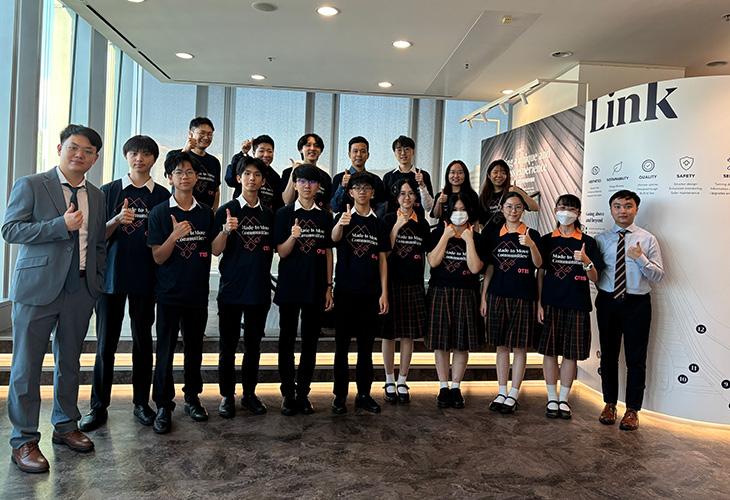 A combined AI and augmented reality system for first responders that would provide real-time visibility and connectivity to enhance performance in smoke-filled, low-visibility situations.
-
Transcona Collegiate Institute; Winnipeg, Manitoba, Canada
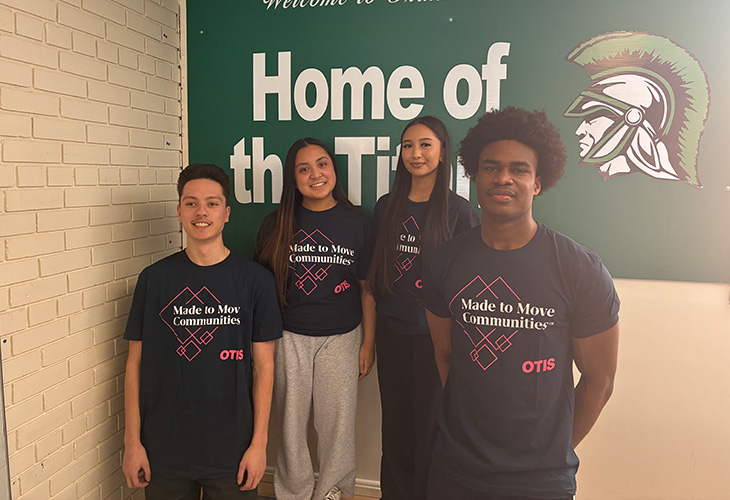 A flotation device designed for wheelchair users that would provide essential support during typhoons and floods in rural areas until help arrives.
-
Hiroshima Global Academy; Toyota District, Hiroshima, Japan
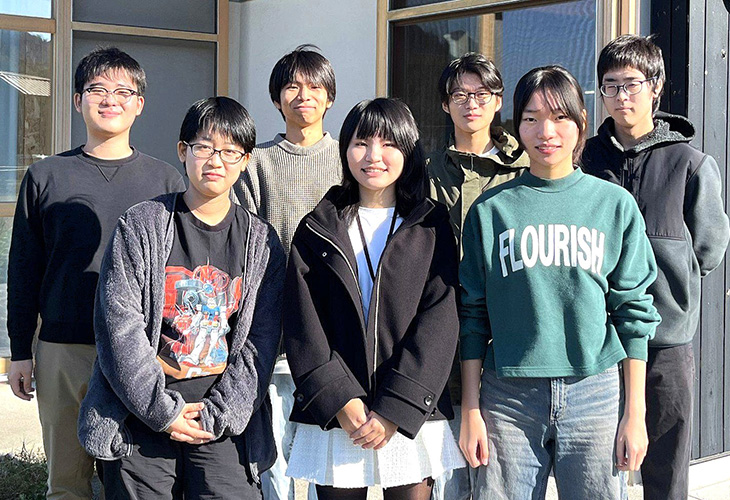 An AI-powered disaster-response system that would use drones to map evacuation routes in real time and guide vulnerable residents safely to shelters with light and audio cues.
-
Global winner: Pembroke Pines Charter High School, Florida, United States
A smartphone application that uses AI to aid individuals with visual impairments by providing a description of their surroundings to help navigate spaces.
-
Yamagata Higashi High School, Yamagata Prefecture, Japan
An AI-equipped mobility scooter to prevent falls and provide a safe mobility experience for older populations.
-
Tianjin Farragut School, Tianjin, China
An AI-powered elevator system that optimizes multi-elevator coordination for efficient resource allocation, while integrating smart hardware to enhance travel comfort.
-
Üsküdar American Academy (UAA), Istanbul, Türkiye
An AI-based app that sends audio, visual, and vibrating notifications to smartphones and smartwatches, helping individuals with hearing impairment recognize emergency alerts, audible hazards and warnings in their environment.
-
Liceo Polivalente Rigoberto Fontt Izquierdo, Santiago, Chile
Created a comprehensive redevelopment plan for an underutilized open area outside of the city. The plan includes reforestation of the area and proposes a public-private funding model to provide convenient public transportation to access and enjoy its scenic areas.
-
China Jiliang University, Hangzhou, China
Developed a concept for a smart, green elevator that would include visual, tactile, auditory and olfactory elements often found in outdoor spaces, bringing a “virtual” green space to those with limited access to such spaces.
-
Lykeio Irakleiou Attikis, Athens, Greece
Prototyped a smart cane designed to give sensory feedback to individuals with visual impairment to improve navigation of green spaces.
-
Taipei Municipal Zhongshan Girls High School, Taiwan
Designed a concept for a wearable detector embedded in eyeglasses that would pair with a smartphone to alert the user of nearby obstacles when traveling to and visiting green spaces.
-
Wilson High School, Florence (SC), United States
Proposed a variation of a composite roofing shingle to help reduce temperatures and lower energy consumption/cost for homeowners. These shingles would be less expensive and require less maintenance than asphalt, reducing associated runoff waste.
-
Nový PORG, Prague, Czech Republic
Developed a concept for a mapping application that enables users to select the best mode of transportation and route to a destination to minimize carbon emissions. The app also includes ways to identify if certain routes are accessible for persons with disabilities.
-
Kamnoetvidya Science Academy, Wangchan District, Thailand
Created a solution of a website that shows real-time flood data, with push alerts, to help drivers avoid dangerous and/or impassable areas.
-
China Jiliang University, Hangzhou, China
Devised a contactless transit that repurposes wasted energy for improved efficiency.
-
Center for Industrial and Services Technological Studies
Students from the winning team in Mexico proposed a portable bath to help prevent falls in the bathroom, a common location for falls due to slippery floors and often small, tight spaces.
-
GEMS Wellington Academy
The winning student team proposed a connected, motorized wheelchair to help older populations navigate Dubai's shopping malls, which are among the largest in the world.
-
Institute of Technical Education
The winning student team imagined the 'WheelySTIK' – a motorized piece of equipment that mimics caregivers' actions to lift and support the movement of older, less mobile people, thereby reducing the risk of injury to the caregivers.
-
Nanchang University in Nanchang
Students from Nanchang University imagined a smart escalator that can identify passengers in wheelchairs and adjust its steps to create a stable, moving platform for passage.
-
Japan - ICT (International College of Technology) Kanazawa
The student team created a website and app to monitor crowd levels and help revive tourism in Shiramine, where the local economy has suffered due to COVID-19. The app provides real-time data to help visitors more safely and comfortably visit the most popular local tourist attractions, while still avoiding crowds and adhering to occupancy limits.
-
Hong Kong - SAR ELCHK Yuen Long Lutheran Secondary School
Students focused their ideas on improving access in and out of local wet markets. From designing a user-friendly app called Foodson, to a robot that can shop for and deliver fresh groceries, the students’ solutions were customized to meet the needs of those who have less experience with online purchasing and technology.
-
Singapore - Institute of Technical Education
The students created a face mask with a lightweight skin thermometer for real-time temperature checks. The mask helps reduce the time it takes for temperature checks prior to taking public transit, making the daily commute faster while easing concerns about coming into contact with someone who is ill.
-
China
Shanghai Jiaotong
University Zhejiang
University Beijing Institute of Technology
Nankai University
Chongqing UniversityAfter careful research on China’s population, the student teams created mobility solutions to make transportation easier for the country’s large aging population.
Why Made to Move Communities
Inspiring STEM-based mobility solutions
This annual challenge inspires students from around the world to come up with creative, technology-based solutions for eliminating the physical, geographic and financial barriers to mobility that often afflict our neighbors.
Inclusive mobility and well-being
Yet even today, many people lack access to reliable, affordable, convenient means for getting where they need to go, whether it’s school, work, or the market or to receive medical care.
We believe new technologies such as AI, advanced robotics and other smart, connected devices and networks hold the potential to address these challenges and deliver on the promise of inclusive mobility – for everyone, everywhere.
By participating in Made to Move Communities, students get a glimpse into this exciting future – and be encouraged to play a role in shaping the world we live in today and for generations to come.
Preparing the 21st century workforce
85 million jobs unfilled by 2030 due to digital skills gap¹
In the era of Industry 4.0, technology permeates nearly every job category, including manufacturing and many other trades. To prepare themselves for this rapidly evolving workplace, students need a solid grounding in STEM curricula and subjects – science, technology, engineering and mathematics.
Yet according to the World Economic Forum, a digital skills gap may leave as many as 85 million jobs unfilled globally by 2030.¹ Made to Move Communities is one way to help close this gap, by complementing existing school programs with safe, real-world lessons conducted under the guidance of Otis experts – people who are passionate about technology and helping to nurture the next generation of innovators.
Featured stories
Otis Announces Regional Winners in 2026 Made to Move Communities Challenge
Otis Named to Newsweek's Inaugural List of America's Most Charitable Companies